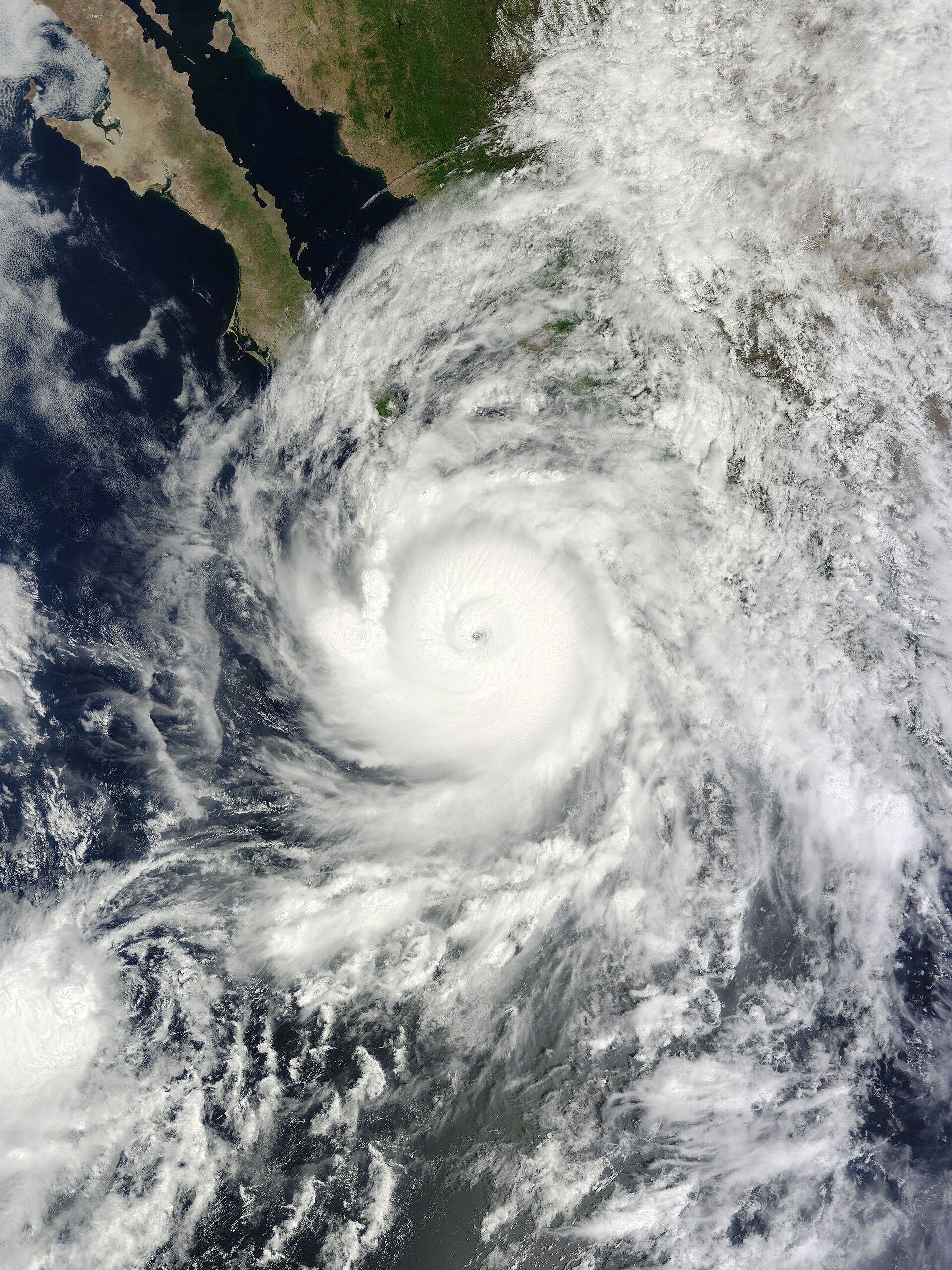
Hurricane season in Cabo San Lucas runs from 15 May to 30 November, with most of the risk between July and September. Rancho San Lucas sits on the Pacific coast north of town, so it shares the same exposure as the rest of Los Cabos. Most seasons pass with storms that bring wind, rain and road closures rather than serious damage, but the 2014 landfall of Hurricane Odile showed what a direct hit does. This guide covers the season, what to check before you buy, and how owners prepare.
Key facts
- Official season: 15 May to 30 November in the eastern Pacific; peak July to September (NOAA)
- Last major landfall: Hurricane Odile, category 3, came ashore just east of Cabo San Lucas on the night of 14–15 September 2014
- Odile’s impact: more than 239,000 people, over 90% of the state, lost power; the airport closed to normal flights for about a month
- What matters most for a home: windows and shutters, roof and drainage, a reliable caretaker, and insurance that names hurricane cover
- Official forecasts: US National Hurricane Center and Mexico’s Servicio Meteorológico Nacional
When is hurricane season in Cabo San Lucas?
The eastern Pacific season officially runs from 15 May through 30 November, according to the NOAA Climate Prediction Center. Its peak months are July through September. In practice, the storms that reach the tip of the Baja peninsula tend to come late in the season, in September and October, when the water is warmest and storms that form off mainland Mexico can curve north-west toward Los Cabos.
For 2026, NOAA’s outlook gave a 70% chance of an above-normal season, with 15 to 22 named storms, 9 to 14 hurricanes and 5 to 9 major hurricanes across the whole eastern Pacific. Most of those storms stay over open ocean. The number that matters to an owner is not how many form, but whether one tracks toward the peninsula, which forecasters can usually see several days out.
What happened during Hurricane Odile?
Odile is the reference point for every conversation about storms in Los Cabos. The US National Hurricane Center’s official report records landfall at 04:45 UTC on 15 September 2014 (late evening on the 14th, local time) just east of Cabo San Lucas, as a category 3 hurricane with winds of about 125 mph. The report calls it the most destructive tropical cyclone on record to affect the region.
- About 550 high-voltage towers and 3,400 distribution poles were destroyed, leaving more than 239,000 people without electricity.
- Los Cabos airport was badly damaged and closed to normal flights for about a month.
- Several hotels lost windows; some buildings flooded or partly collapsed.
- Preliminary losses were put at about 12 billion pesos, roughly US$1 billion.
The power grid and the airport have been rebuilt since, and many homes built after 2014 were designed with Odile in mind. The lesson for owners is less about the wind itself and more about the days afterwards: no power, limited water, damaged roads and a long queue for contractors.
Is Rancho San Lucas more or less exposed than the rest of Cabo?
No part of Los Cabos is immune. Rancho San Lucas faces the open Pacific, so it takes ocean swell and onshore wind directly, while the arroyos (dry washes) that cross the area can run fast in heavy rain. Against that, the homes in The Villas and Norman Estates are recent construction, most of it completed well after Hurricane Odile. The honest answer is that exposure depends on the individual home: its elevation, its orientation, how it drains and how it was built.
What should a buyer check before buying?
A storm-ready home is mostly about details that are easy to check during due diligence:
- Windows and doors: are they impact-rated glass, or does the home have fitted shutters or panels for every opening? Ask to see them and where they are stored.
- Roof: flat concrete roofs are common in Los Cabos; check the date of the last waterproofing (impermeabilizante) and the condition of the roof drains.
- Drainage: where does water go in a heavy downpour? Look for staining, repaired cracks and how close the home sits to an arroyo.
- Backup power and water: a generator, a cistern (aljibe) and a rooftop tank make the days after a storm far easier.
- History: ask the seller and the HOA whether the home has ever had storm damage and how it was repaired.
A professional inspection covers most of this; our guide to new construction versus resale explains how build date changes what you should look for.
How do owners prepare when a storm is coming?
Many Rancho San Lucas owners are not in residence in September, so preparation is really about the person who looks after the house. A good caretaker or property manager will have a written storm plan that covers:
- Bringing in or tying down furniture, umbrellas and planters from terraces and roofs.
- Fitting shutters or panels, and securing every opening.
- Clearing roof drains and site drainage before the rain arrives.
- Filling the cistern and tanks, and testing the generator and its fuel supply.
- Turning off gas and non-essential power, and photographing the home before and after for insurance.
- Reporting to the owner as soon as it is safe, with photos.
Agree the plan, the cost and the chain of communication before the season starts, not when a storm appears on the forecast. Our article on property management costs covers what that service typically includes.
Does home insurance in Mexico cover hurricanes?
It can, but you have to ask. Mexican homeowner policies usually place hurricane, flood and storm-surge damage under a separate heading, often called riesgos hidrometeorológicos, and that cover tends to carry its own deductible, frequently a percentage of the insured value rather than a fixed amount. Some policies also apply a co-insurance share. Before you rely on a policy, confirm in writing that windstorm and flood are included, what the deductible is, whether contents and loss of rental income are covered, and whether the home must have shutters for the cover to apply. This is general information, not insurance advice; a licensed broker can compare policies for your home.
Where can owners follow a storm?
The National Hurricane Center publishes advisories, forecast cones and wind probabilities for the eastern Pacific in English. Mexico’s Servicio Meteorológico Nacional issues the official national warnings in Spanish, and Los Cabos civil protection (Protección Civil) announces local measures such as shelters and school closures. Your property manager and HOA are usually the fastest source for what is happening inside the community gate.
Frequently asked questions
When is hurricane season in Cabo San Lucas?
The eastern Pacific hurricane season runs from 15 May to 30 November. The peak is July to September, and storms that reach Los Cabos most often arrive in September or October.
When did a hurricane last hit Cabo San Lucas?
The last major hurricane to make landfall at Los Cabos was Odile, a category 3 storm that came ashore just east of Cabo San Lucas on 15 September 2014 (UTC). Other storms have brought heavy rain and wind since, without a comparable direct hit.
Is it safe to visit Rancho San Lucas in hurricane season?
Most of the season is calm, and storms are tracked days in advance. Travellers in August to October should buy travel insurance, follow National Hurricane Center advisories and be ready to change plans if a storm approaches.
Do I need hurricane shutters on a Rancho San Lucas home?
Every opening should be protected by impact-rated glass or by shutters or panels. Some insurers ask for this, and it is the single most effective way to limit wind and water damage.
Does Mexican home insurance cover hurricane damage?
Many policies do, under a separate hydro-meteorological section with its own deductible. Confirm in writing that windstorm and flood are included and what the deductible is.
Summary
Hurricanes are a real but manageable part of owning in Los Cabos. The season runs from mid-May to the end of November, with the risk concentrated in September and October. Buy a home with protected openings, good drainage and backup power and water, put a written storm plan in place with your caretaker, and make sure your insurance names hurricane cover. Our guide to living here year-round covers the rest of the seasons.
Talk to us
For the full sold history behind any figure in this article, a list of what is for sale today, or a pricing review of your own home, contact the Rancho San Lucas team, email [email protected] or WhatsApp +52 624 147 1728.
Featured photo: Satellite image of Hurricane Odile approaching the tip of Baja California Sur, 14 September 2014. Photo: NASA’s Terra/MODIS satellite / Wikimedia Commons, Public domain (source).