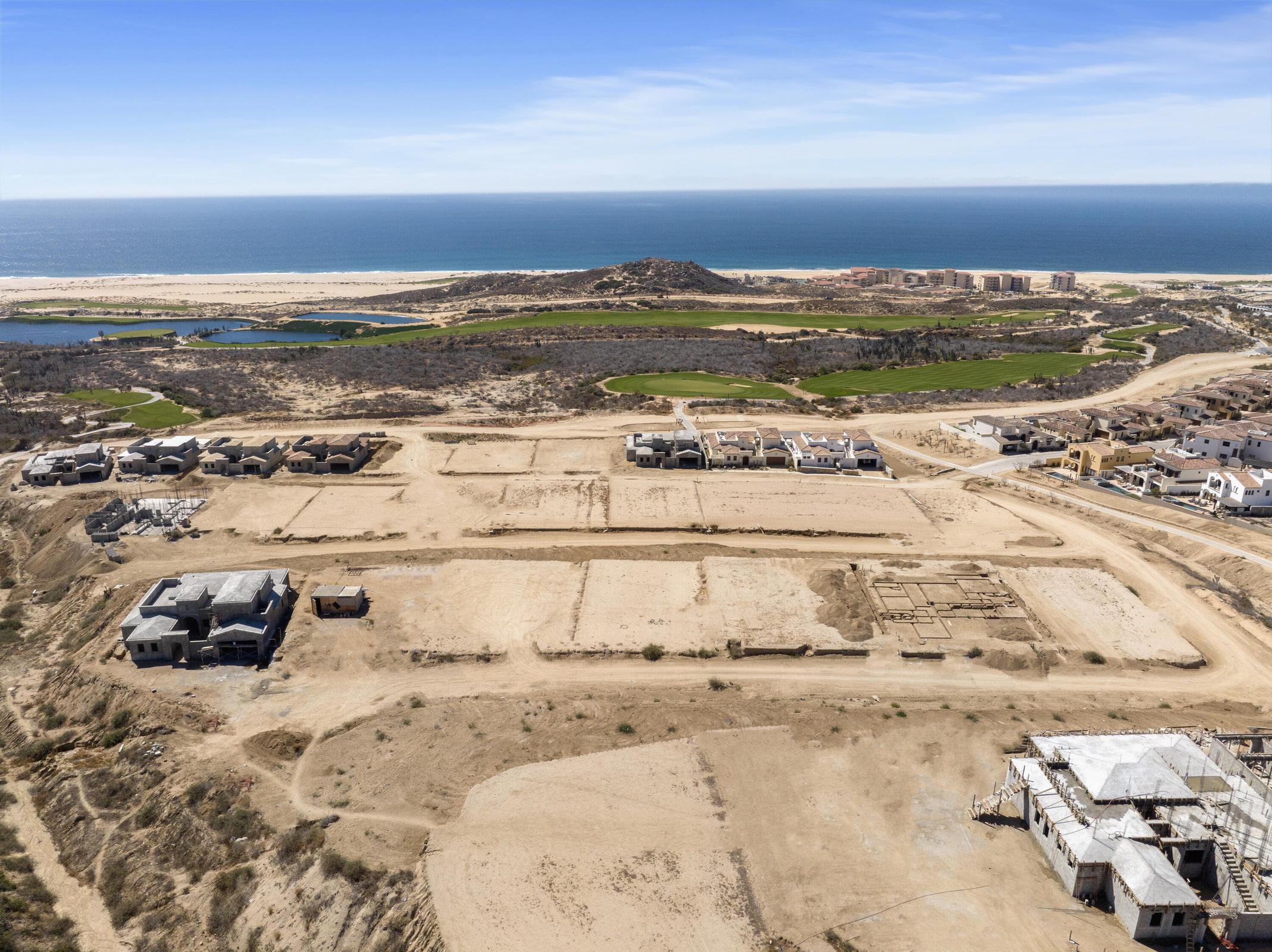
Is Rancho San Lucas a good investment? The honest answer is that it depends entirely on what you mean by investment – and the buyers who do well here are the ones who are clear about that before they sign anything.
Three different theses
People buy here for three quite different reasons, and they should be evaluated separately.
- Lifestyle with cost recovery. You want to use the property and offset carrying costs with rental income. This is the most common and the most achievable.
- Income asset. You want net yield. This is a harder case and needs the numbers to work with minimal owner use.
- Land appreciation. You buy a homesite, hold, and sell into a stronger market. This is the highest risk and highest potential return.

What supports the case
Finite supply. Rancho San Lucas is a bounded 834-acre masterplan. Norman Estates is capped at 32 homesites. There is no mechanism to add more oceanfront, which is the fundamental argument for holding front-row land.
Los Cabos fundamentals. The region has had sustained air-service growth, a stable luxury tourism base and consistent North American demand. Mexico’s national statistics agency INEGI publishes the underlying economic data if you want to look past the marketing.
The Pacific-side shift. Ten years ago the corridor was the story. Now the Pacific side – Rancho San Lucas, Diamante, Quivira – is where the new inventory and the new infrastructure have gone.
The resort layer. Grand Solmar gives owners a services infrastructure that a standalone subdivision cannot match, and that supports rentability.
What works against it
Thin resale market. Twelve active listings is not liquidity. If you need to exit quickly, you may not be able to at your number.
Currency. You earn in dollars, spend on a peso cost base, and your exit is priced in dollars. The peso moves.
Carrying costs are real. HOA dues, the annual fideicomiso fee, predial, insurance, electricity, and a furnishing replacement cycle driven by salt air.
Construction risk on land. A homesite is not a finished asset. Build costs and timelines in Baja are less predictable than most buyers assume, and a lot held undeveloped generates nothing while it costs you dues.
Which product suits which thesis
For cost recovery, the Golf Villas condos are the obvious fit – turnkey, rentable, roughly $695,000 to $799,000, and the easiest to hand to a manager.
For land appreciation, Norman Estates front-row lots are the concentrated bet. High conviction required, and a long horizon.
For entry-level exposure, The Villas homesites from around $369,000 are the lowest capital commitment inside the gates.
Questions to ask before you commit
- What is my realistic holding period? Under five years is speculation.
- How many high-season weeks will I actually use?
- Can I carry this comfortably if it rents zero nights for a year?
- What do comparable units actually net, per twelve months of real statements?
- What is my exit? Who buys this from me, and at what price?
Frequently asked questions
Has Rancho San Lucas appreciated?
The community is young – the golf course opened in 2020 – so there is a limited resale history to draw on. Be sceptical of anyone quoting confident long-run appreciation figures for a community this new.
Is financing available?
Some sellers and the developer offer terms. Conventional Mexican mortgages exist at rates above what US buyers expect. Most deals here are cash.
How liquid is the market?
Entry-level homesites move reasonably. Anything above $2 million can take a long time. Price your exit assumptions accordingly.
Stress-testing your assumptions
Before committing, it is worth running the pessimistic case rather than the brochure case. Three scenarios are enough.
Flat market, normal rentals. Values unchanged in five years, rental income as projected. Do the carrying costs and the eventual selling costs leave you whole?
Flat market, no rentals. You never let it. Can you carry HOA dues, the fideicomiso fee, predial, insurance and utilities indefinitely without strain?
Down market, forced sale. You need to exit in a poor year. In a market with twelve active listings, what does a motivated sale actually fetch?
If all three are survivable, you are buying sensibly. If only the optimistic case works, you are speculating and should size the position accordingly.
Land versus built, as an investment question
Land offers the higher potential return and carries the higher risk. It produces no income, costs you dues while you hold it, and converting it to a finished asset means an eighteen to twenty-four month build with budget uncertainty.
A finished condominium produces income from month one, is far easier to value and far easier to sell. It also has a lower ceiling.
Which is right depends entirely on whether you have the time horizon and the appetite to run a construction project from abroad. See building versus buying finished.
The regional picture
Los Cabos has grown on the back of air service, tourism and North American second-home demand. Those drivers are durable but not guaranteed – they are sensitive to the US economy, to airline capacity decisions, and to currency. Mexico’s statistics agency INEGI publishes the underlying data, and it is worth twenty minutes of your time before a seven-figure commitment.
Look at the real numbers
I would rather show you actual statements than a projection. Browse current condos and land, then get in touch and we can model your specific case properly.
Not investment advice. Do your own due diligence and take professional counsel.